Holy Blood, Holy
Grail, by Michael Baigent, Henry Lincoln, Richard Leigh
"A brilliant
read, see how history was changed and manipulated by the church. See how a poor
French monk thumbed his nose
at the pope, and because he discovered the
"real truth". The church was terrified of him. The more you
read of this book the more
you become disgusted of religion."
The Messianic
Legacy, by Michael Baigent, Henry Lincoln, Richard Leigh
"Don't read it
if you have a weak stomach or your not able to think for yourself other than
what the priesthood tells you. It's another
eye-opener!!! The authors further
dissect elements of the life and times of Jesus and go on to discuss the
development of the
schism between Jesus's followers lead by his family members
and the group of so-called "christians" lead by Paul. The method
of
these historians is breathtaking in its scope and elegance."
The Fallen Star or the History of a False Religion and a Dissertation on the
Origin of Evil, by E.L. Bulwer, Lord Brougham
"The author has
shown how easily religions' votaries were ensnared, deceived, and mentally
bound in a labyrinth of falsehood and
error. The history of the origin of one
religion will, with slight alterations, serve to describe them all. Their claim
to credence rests
on the exhibition of miracles which are a violation of the
laws of nature. If religions were founded on the demonstrated truths of
science, there would be no mystery, no supernaturalism, no miracles, no
skepticism, no false religion. We would have only verified
truths and
demonstrated facts for the basis of our belief."
Pagan and
Christian Creeds: Their Origin and Meaning, by Edward Carpenter
"A very level-headed approach, doesn't go after Christianity to attack it,
merely compares
and contrasts it with the Pagan world and explores
similarities and
hidden meanings still present in the religion today.
Incredible
implications."
Eunuchs for the Kingdom of Heaven: Women, Sexuality, and the Catholic
Church, by Uta
Ranke-Heinemann
"This scholarly
but accessible book details the way in which a deep mistrust of pleasure, and
therefore women, came to be a
defining characteristic of the Christian church.
Focusing particularly on Roman Catholicism, Ranke- Heinemann shows that
marginalization of women and sexual repression are not inherent in Catholic
belief, but have taken center stage over centuries of
interpretation by celibate
men."
The Great
Infidels, by Robert Green Ingersoll
"The master orator eloquently eulogizes a few of the world's greatest
freethinkers (Bruno,
Voltaire, Paine, etc.). He boldly states what their
honest and courageous
minds endowed to humanity. He also dispenses
with the clergy who
so ravenously attack the character of these brilliant
lovers of Liberty and
Reason."

Atheism: The
Case Against God, by George H. Smith
"I
find it hard to imagine that an open-minded theist could read this book
without coming away
with serious doubts about the validity of the concept
of a god. While
scholarly, it remains approachable in its disassembly of the
validity of faith,
revelation, and the standard attributes of supreme
beings. A must for
any infidel's bookshelf, and a great challenge to theists who are
open-minded enough to
read opposing viewpoints."
."
The Big Domino
in the Sky and Other Atheistic Tales, by Michael Martin
"Incorporating material from his acclaimed technical works, Michael Martin
demonstrates that well-reasoned skeptical
positions don't need to be
presented in dry, philosophical prose.
Instead, this defense of atheism is written in
the form of science fiction, historical
fiction, and fantasy that will arouse,
provoke, and inspire the reader. The
stories reveal the fallacies of traditional
arguments for the existence of God and
the improbability of God's existence given the
evil in the universe."
Atheism: A
Philosophical Justification, by Michael Martin
"Thousands of
philosophers--from the ancient Greeks to modern
thinkers--have
defended atheism, but none more comprehensively than
Martin. . .
Atheists should read it to bolster their creed, and theists
should read it to
test their faith against the deadly force of Martin's
attack."
Asimov's Guide
to the Bible: The Old and New Testaments/Two Volumes in One, by
Isaac Asimov
"If you are
really interested in a critical and accurate review of the most misused book in
history, the bible, the work and writing of Asimov, in these volumes as
well as in his other science materials is a must. If you fear a challenge or
need the comfort of myth, legend and superstition, don't read this
book, or Sagan, they may make you think."
Critiques of
God: Making the Case Against Belief in God, by Peter A. Angeles (Editor)
"Peter Angeles
sets out to assemble an anthology--"of value to undergraduate philosophy classes
as well as to the general public" --that presents the case against God."
Who Wrote the
Bible?, by Richard Elliott Friedman
"Focusing on
Genesis, Exodus, Leviticus, Numbers, and Deuteronomy, Friedman draws upon
biblical and archaeological evidence to make a convincing argument
for the identities of their authors."
Leaving the
Fold, by Marlene, Ph.D. Winell
"As a former
fundamentalist, I have worked over the past ten years with individuals and
small groups focusing on recovery from religious dysfunction and addiction.
Although there are several other excellent resources on this topic, Winell's book
is essential for understanding how Christian funda- mentalism and
conventional Christian religion can foster dependency in its adherents."
Leaving the Fold: Testimonies of Former Fundamentalists, by
Edward T. Babinski (Editor)
"This riveting new collection offers testimonies of former
fundamentalists
who became disillusioned with their
churches and left. Presenting more than two
dozen personal journeys, this book
gives a clear picture of what attracts a
person to the fundamentalist faith
and what can drive believers away from
their religion."
Losing Faith in Faith: From Preacher to Atheist, by Dan
Barker
"About half of the book is Barker's story of his conversion and
deconversion. The other half are a
collection of essays Barker has put together about
biblical errancy, his TV appearances
and debates, and his experiences in the Atheist
community. A modern classic of
freethought literature."
Maybe Right, Maybe Wrong: A Guide for
Young Thinkers, by Dan Barker, Brian Strassburg (Illustrator)
"Discusses learning right from wrong, stressing such aspects as the
difference between rules and
principles and the importance of an individual's rights."
Maybe Yes, Maybe No: A Guide for Young Skeptics, by Dan
Barker, Brian Strassburg (Illustrator)
"Excellent non-pushy kid's introduction to skepticism. I read this book
to
my kids, ages 8 and 10, and they absolutely
loved it. One took it to bed
that night to re-read and the other
took it to school the next day. I've never
seen such a strong positive reaction
to a book from them. Yes, it's simplistic,
but it's a kid's book; it has to be.
As a parent, what i liked the most
about it is the gentle manner in
which difficult questions are introduced. We had
to pause many times for thoughtful
discussion. Kudos to Mr. Barker for
an excellent book encouraging
children to question the world around them
and to try to apply scientific
methods to understand it."

How Do You Know It's True? Discovering the Difference Between Science
and Superstition, by Hyman Ruchlis, Hy Ruchlis
"Far
and away the best of the best of new releases for teaching critical
thinking to young people. Actually,
this is for anybody, young or old,
who still has a tendency to flirt
with any form of superstition or
fairy-tale thinking or is curious why
other people do so."
Why I Am an Agnostic and Other Essays (The Freethought Library), by
Clarence Darrow
"The renowned lawyer Clarence Darrow (1857-1938) was also an impassioned
defender of intellectual freedom,
individual liberties, and social
injustice. In these wide-ranging
essays, Darrow attacks beliefs in the inerrancy of the Bible, the
immortality of the soul, miracles, and heaven as being completely at odds
with human experience and science."
God and Evil: An Introduction to the Issues, by Michael
Peterson
"This concise survey examines the problem of evil in the context of the
philosophy of religion. The main
problem of evil consists in reconciling
belief in a just and loving God with
evil and suffering in the world."
Nonbelief & Evil: Two Arguments for the Nonexistence of God, by Theodore M.
Drange
"Drange's book, with more clarity and meticulous attention to detail
than
perhaps any other on the subject, demolishes
traditional beliefs with two
simple arguments. The existence of
nonbelief (in God) and evil (premature
death and suffering), as Drange
persuasively demonstrates, may very well
constitute an insurmountable
challenge to theists, especially evangelical
Christians."

What Is Atheism? A Short Introduction, by Douglas E. Krueger
"This
book is extremely well written, easy to understand and makes a great
companion book for Atheists and
theists alike. Unsure what Atheism is?
Douglas' book will explain it in
concise and easy to read terms but he
doesn't 'dumb it down'. I can't say
enough good things about this book
other than to say Buy it, read it,
absorb it, live it!"
Divine Hiddeness and Human Reason (Cornell Studies in the Philosophy of
Religion), by J.L. Schellenberg
"In this clearly written and tightly argued book, J. L. Schellenberg
addresses a fundamental yet neglected
religious problem. If there is a God, he asks,
why is his existence not more
obvious? Traditionally, theists have claimed that
God is hidden in order to account for
the fact that the evidence of his
existence is as weak as it is.
Schellenberg maintains that, given the understanding of
God's moral character to which
theists are committed, this claim runs into serious
difficulty."
Arguing for Atheism: An Introduction to the Philosophy of Religion, by
Robin Le Poidevin
"The arguments are accessible to the non-philosopher, all terminology
is
carefully explained when introduced. this
book is rewarding for the
intellectual exercise provided by the
rigorous logic and for the insights that deep
analysis of personally significant
beliefs can reveal. You do not have to be an
Atheist to enjoy this concise and
fair set of arguments in defense of Atheism and of embracing
religion as useful fiction."
The Godless Constitution: The Case Against Religious Correctness, by
Isaac Kramnick, R. Laurence Moore, Laurence Moore (Contributor)
"Concise Defense of the Separation of Church and State - This book
examines American History to discover
the original intent of the First
Amendment. America is not, nor has it
ever been an instrument for
religion. It was purposely founded on
secular ideals to avoid the
oppression which all to often plagued
governments where church
and state were not separated. The
American form of government is
founded on ideals which were
formulated in the mind of man."
Carl Sagen's Baloney Detection Kit...

Why the Religious Right Is Wrong About Separation of Church & State, by
Rob Boston, Robert Boston, Barry W. Lynn (Introduction)
"A
journalist's account of how the religious right is using the political
arena to wage war against the
governing principle of separation of church and
state to promote their
ultraconservative agenda. The dangers of the
Religious Right movement - Rob Boston
presents an intelligent, well written argument
against the threat of the Religious
Right movement in America. He traces
church-state relations from several
hundred years ago to the present day
and confronts the non-seperationists
with zeal and passion."
The Most Dangerous Man in America? Pat
Robertson and the Rise of the Christian Coalition, by Rob
Boston, Robert Boston
"Despite televangelist Pat Robertson's high ranking in the powerful
Christian Coalition, many Americans
are unaware of his extreme political views or his goals for the
United States. This book examines the role Robertson plays in
contemporary politics and his efforts
to influence American society through
his various political organizations,
businesses, and broadcast empire."
Eternal Hostility: The Struggle Between
Theocracy and Democracy, by Frederick Clarkson
"What is behind the violence against
abortion clinics, attacks on gays and
lesbians and the growing power of the
religious right? Frederick Clarkson
makes it clear that beyond the
bombers and assassins who sometimes make
news, is a growing, if not well
understood, movement that encompasses Pat
Robertson's Christian Coalition, the
Unification Church of Sun Myung Moon
and the Promise Keepers--the lead
agency of the so-called Christian men's
movement.
Not by Politics Alone: The Enduring
Influence of the Christian Right, by Sara Diamond
"The Christian right is many things. Its a political coalition with
strong
ties to and influence on the Republican
Party, but its also a subculture
that provides, as she puts it, ``a
safe haven when political success is not
forthcoming. Through the media,
church and community organizations,
and other avenues, the right creates
a strong ideology. The ideology
propagates the notion that this is a
persecuted group battling immoral
enemies (e.g., abortion doctors, gay
employees) in an eternal struggle
between good and evil. In such a
context, momentary political travails
are of little consequence."
Wrath of Angels: The American Abortion War, by Jim Risen,
Judy Thomas, James Risen
"Wrath of Angels is hard-hitting, objective, scary. From governmental
agencies more concerned about their egos than solving clinic bombings, to
the terrorist praising God in prayer and song while driving from a clinic
she just torched, it is not only scary; it is sickening. Whether Catholic or
fundamentalist, from the left or the right, blockades or bombings or
shootings, these are people who believe they have some message from God to
deny women the ability to make personal, medical decisions about their
reproductive lives. Each part of the story is told in a way that gives
readers the opportunity to make up their own minds and judge for themselves
the appropriateness of these actions."
The True Believer: Thoughts on the Nature of Mass Movements,
by Eric Hoffer
"As we try to make sense of our world, it helps to explore the wisdom of
people like Eric Hoffer. Known as the longshoreman philosopher, Hoffer had
virtually no formal education, yet his awareness of the human condition was
exceptional. In 1951 his first book, The True Believer was published.
Subtitled Thoughts on the Nature of Mass Movements, it offers insights still
helpful today. Here are just a few of Eric Hoffer's observations: 'The less
justified a man is in claiming excellence for his own self, the more ready
he is to claim all excellence for his nation, his religion, his race or his
holy cause.' 'A man is likely to mind his own business when it is worth
minding. When it is not, he takes his mind off his own meaningless affairs
by minding other people's business.'"
Deceptions and Myths of the Bible, by Lloyd M. Graham
A "must read" for every seeker of the truth. Lloyd Graham, whoever he is,
has made me a non-believer! After reading "The History of the World", I
started seeking information of the historical validity of Christ, and have
came to the conclusion, as Mr. Graham demonstrates, there just isn't any. I
would like to see more from this author, but, there may be no need for it!"
 Steve Allen on the Bible, Religion, and Morality, by Steve
Allen, Martin Gardner
Steve Allen on the Bible, Religion, and Morality, by Steve
Allen, Martin Gardner
"This
is an excellent layperson analysis of the Holy Bible. Steve Allen makes no
pretension to biblical scholarship. Indeed, must one have such credentials
to understand and appreciate the alleged word of God? I think not and
neither does Allen as he rips through dozens of topics revealing the blatant
flaws and fallacies of the "good book". He does stop to smell the proverbial
flowers, which are the few and far between edifying passages. I must say
that it is truly incredible that those of the Western culture either do not
see or do not know how much of the Holy Bible is not well suited to
children's bedtime stories."
More Steve Allen on the Bible, Religion, & Morality/Book II,
by Steve Allen "Steve Allen is the rarest of treasures-a comic genius
and a deeply profound thinker. As Allen says in this book, and in its
prequel, many of us have been guilty of reading the Bible for years without
truly considering the impact of the moral values it expounds. Written in a
"dictionary topical" style, most readers will not likely read it cover to
cover in one sitting (though I did) . Those who take the time to read its
contents, however, will be unable to avoid rethinking and reconsidering
their long-held assumptions concerning the teachings of scripture and its
impact on Western culture's view of morality."
|
"And religious
scholars said some people who believe in God are also buying books
written by atheists to see how the other side thinks..."
|
Atheists Are An Increasingly
Outspoken Minority
Reporting: J i m W i l l i a m s
CHICAGO (CBS) In this presidential campaign season, Democrats
and Republicans alike have declared their religious faith. They do
it, in part, because they believe it wins political points. After
all, the latest Harris polls show somewhere between 73 and 80
percent of Americans believe in God. But what about the rest?
Agnostics say they just don't know; others say they are firm
non-believers. Whichever is the case, non-believers a re
increasingly outspoken in modern America.
By all appearances, the Lows are a tight-knit, loving family. Ron
and Alice are devoted parents. Daughters Morgen and Maddy are good
students involved in wholesome activities. |

The Golden Compass
Over 1,126 customer reviews |
His Dark Materials
Trilogy:
The Golden Compass
The Subtle Knife
The Amber Spyglass
by
Philip Pullman |
For kids and
young teens !
For kids and young
teens! Philip Pullman unlocks the door to worlds parallel to our own. Dæmons and winged creatures live side by side with humans, and a mysterious
entity called Dust just might have the power to unite the universes -- if it
isn't destroyed first. The three books in Pullman's heroic fantasy series,
published as mass-market paperbacks with new covers, are united ere in one
boxed set that includes The Golden Compass, The Subtle Knife, and The Amber
Spyglass.
Join Lyra, Pantalaimon, Will, and the rest as they embark on the
most breathtaking, heartbreaking adventure of their lives. The fate of the
universe is in their hands.
(Ages 13 and older).
[BOX SET]
~ Pick up a copy for a child ! ~ |
|
LINK -
Foxnews.com:
"Christian Groups Claim Pro-Atheist 'Stealth Campaign'
in Nicole Kidman Fantasy Film The Golden Compass" |
Take a
look at these MAGAZINES and more
!


The 101+ Book Atheism Library
continues...
 |
~~~~Page by @Com ~~~~ Amazon.com is pleased
to have @Com in the family of Amazon.com associates. We've agreed to ship books and
provide customer service for orders we receive through special links on @Com. Amazon.com
associates list selected books in an editorial context that helps you choose the right
books. We encourage you to visit @Com often to see what new books they've selected for
you. Thank you for shopping with an Amazon.com associate.
Sincerely,
Jeff
President
Amazon.com Books
P.S. We guarantee you the same high level of customer service you would receive at
Amazon.com. If you have a question about an order you've placed, please don't hesitate to
contact us.
|


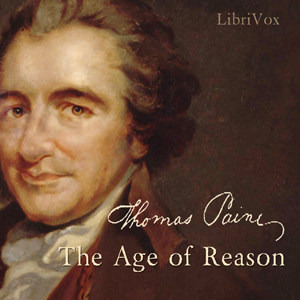











 During the first centuries
A.D. Christianity grew from humble origins
to become the official religion of the
Roman Empire. The newly discovered Gospel of
Judas gives a
different view of the relationship between
Jesus and Judas, offering new insights into
the disciple who betrayed Jesus. Unlike the
accounts in the canonical Gospels of
Matthew, Mark, Luke, and John, in which
Judas is portrayed as a reviled traitor,
this newly discovered Gospel portrays Judas
as acting at Jesus' request when he hands
Jesus over to the authorities.
During the first centuries
A.D. Christianity grew from humble origins
to become the official religion of the
Roman Empire. The newly discovered Gospel of
Judas gives a
different view of the relationship between
Jesus and Judas, offering new insights into
the disciple who betrayed Jesus. Unlike the
accounts in the canonical Gospels of
Matthew, Mark, Luke, and John, in which
Judas is portrayed as a reviled traitor,
this newly discovered Gospel portrays Judas
as acting at Jesus' request when he hands
Jesus over to the authorities.